
Find Your Perfect Fit
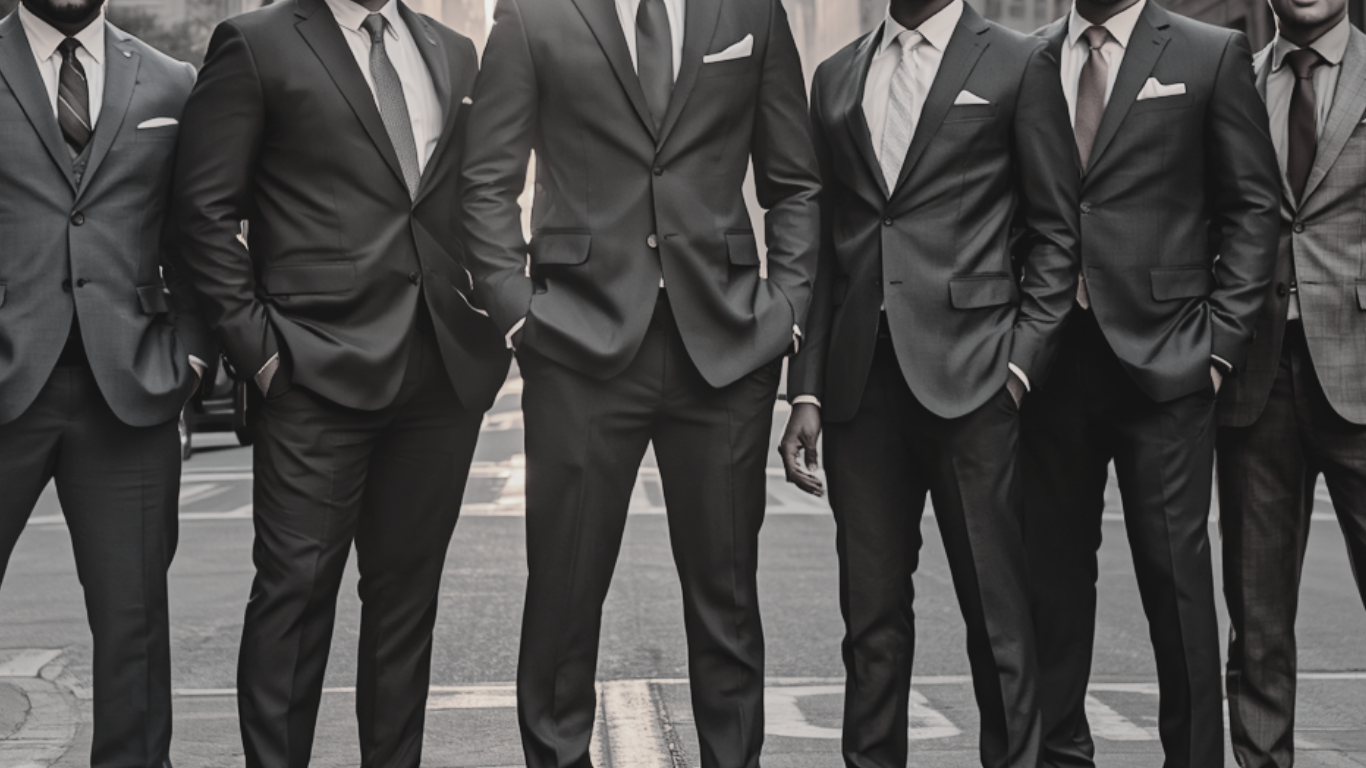
Every body is different — and great tailoring should reflect that.
Our fit options are designed to help you find the silhouette that feels most like you, whether you prefer a sleek, fashion-forward cut or a more relaxed tailored look.
Fit Modifiers (Silhouette)
Sculpted Fit - Our slimmest, most fashion-forward silhouette
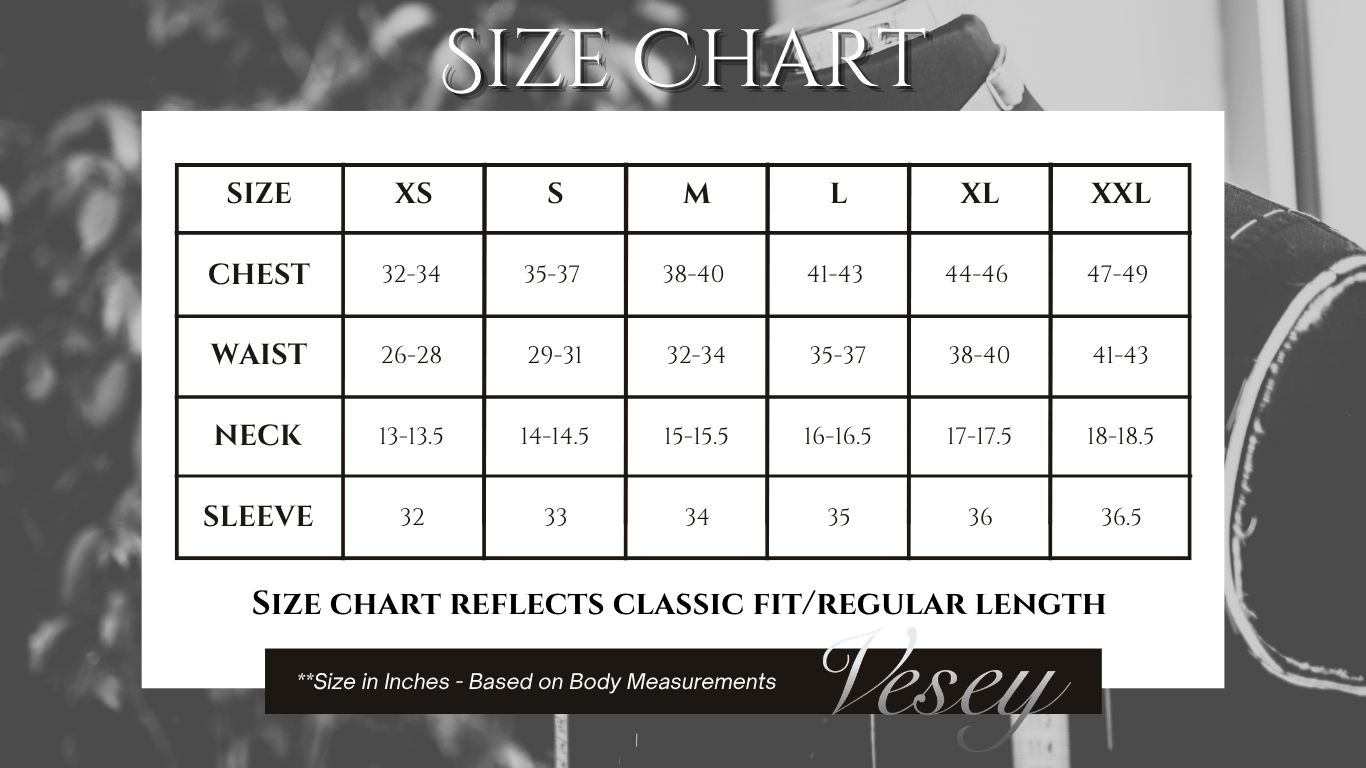
Size chart adjustments - Subtract 1.5" from chest. Subtract 2" from waist
Fit - Designed with a closer fit through the chest, waist, sleeves, and trousers for a sharp, streamlined appearance
Best for - Slim builds • Editorial styling • Modern tailoring lovers
Tailored Fit - Our signature modern fit
Size chart adjustments - Subtract 0.5" from chest. Subtract 1" from waist
Fit - Balanced and versatile, this fit offers a clean tailored silhouette with comfortable movement
Best for - Most body types • Weddings • Everyday luxury • Modern classic styling
Classic Fit - A timeless, traditional silhouette
Size chart adjustments - No changes. Standard industry ease
Fit - Cut with a bit more room through the chest, waist, and leg while maintaining a polished shape. Comfortable, elegant, and never overly slim
Best for - Traditional styling • All-day comfort • Timeless suiting
Relaxed Tailored - Refined comfort with an effortless feel
Size chart adjustments - Add 1" to chest. Add 1.5" to waist
Fit - Designed with additional ease through the torso, seat, and trousers while still maintaining a tailored appearance
Best for - Comfort-focused tailoring • Broader builds • Relaxed luxury styling
Athletic Fit - Tailored for stronger builds with a refined silhouette
Size chart adjustments - Add 1" to chest. Subtract 1.5" from waist
Fit - Designed with additional room through the shoulders, chest, upper arms, and thighs while maintaining a clean tapered waist and polished profile
Best for - Athletic builds • Broad shoulders • Larger thighs • Clients who train or prefer additional mobility
Length Modifiers (Height)
Because proportions matter just as much as measurements, we offer multiple length options to create a balanced, flattering silhouette. Length options affect jacket length, sleeve length, rise, and trouser inseam.
Short - Clients under 5'8" or those with shorter proportions
Size chart adjustments - Subtract 1.5" from jacket. Subtract 1" from sleeve
Fit - Designed for shorter proportions with adjusted jacket and trouser lengths for a balanced fit.
Regular - Clients approximately 5'8"–6'1"
Size chart adjustments - Baseline measurements. No changes
Fit - Our standard proportion designed to fit most body types comfortably and cleanly
Tall - Clients approximately 6'1"–6'4" or those with longer proportions
Size chart adjustments - Add 1.5" to jacket. Add 1" to sleeve
Fit - Created with extended sleeve, jacket, and trouser lengths for taller proportions while maintaining proper balance throughout the silhouette
Extra Tall - Clients approximately 6'5" and above
Size chart adjustments - Add 3" to jacket. Add 2.5" to sleeve
Fit - Designed specifically for very tall frames requiring additional length and proportion adjustments throughout the garment
_________________________________________________________________________________________________________________________
How To Take Your Measurements
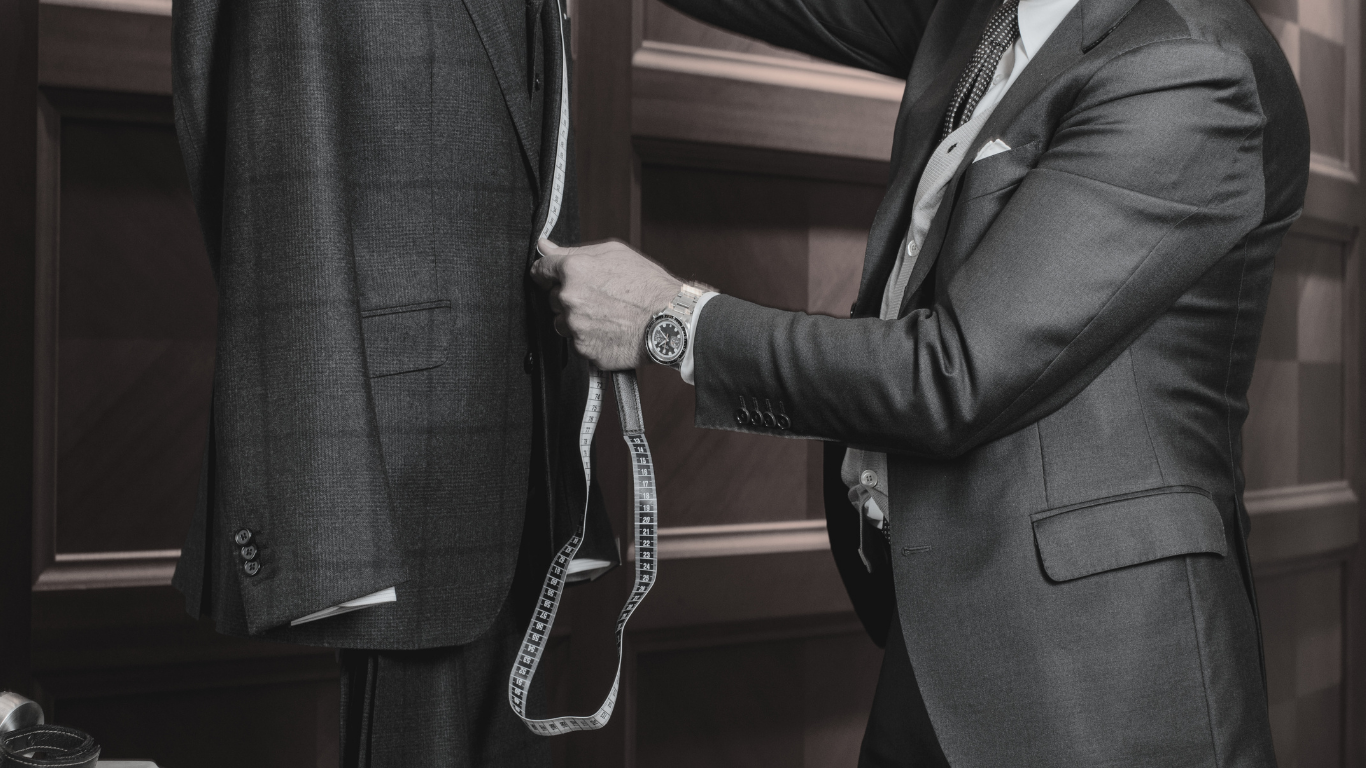
It seems straightforward enough to measure your neck, sleeves, chest, and waist. But just ask your nearest tailor and they’ll confirm there’s a bit of a knack to it. For example, it’s ideal to use a soft measuring tape when taking body measurements, as it’s easy to wrap around your body. If you don’t have a measuring tape like this, you can use a string instead and measure it with a ruler or stiff tape measurer.
Armed with the right tools, next you need to know the right methods for measuring:
Neck
Being half of a numerical size, the neck is one of the most important measurements in a men’s shirt. It’s vital to get it right. The biggest variable in taking an accurate neck measurement is making sure you factor in enough room for comfort.
To get a proper neck measurement for your dress shirt, first wrap the measuring tape around your throat. While keeping the tape in place, slide one to two fingers between your neck and the tape. This will allow some space for breathing when the collar is buttoned.
Sleeve
Your sleeve measurement is more than just the length of your arm. To get this right, measure from the point on your spine where your neck intersects your shoulders. Run the tape along the top of your shoulder and down on the outside of your arm toward your wrist. End the measurement where you want the cuff of your sleeve to sit. Don’t forget to allow a bit of room in the measurement by bending your arm slightly.
The length of each arm is somewhat different in most people. Measure both sleeves twice and note the longer of the two. If your sleeve measurement is between two available shirt sizes, always opt to buy the longer of the two. Too much fabric is easier to work with than not enough.
Chest
Start by wrapping a measuring tape around the fullest part of your bare chest and backside. Usually, that would mean the tape measure will run over top of your nipples and shoulder blades. To get an accurate measurement, make sure you’re holding the tape level and parallel to the ground. It’s helpful to pin the start of the tape in place between your arm and side as you level it and wrap it around yourself.
To get the final measurement, take a small breath in. This will allow for a comfortable and non-constricting fit.
Waist
Regardless of technicalities, consider your waist to be the height at which you would comfortably wear your pants. If you’re not sure, measure around your torso about one inch below your belly button. Keeping the tape parallel with the ground. For the most reliable waist measurement, stand naturally and place one finger between your body and the measuring tape.